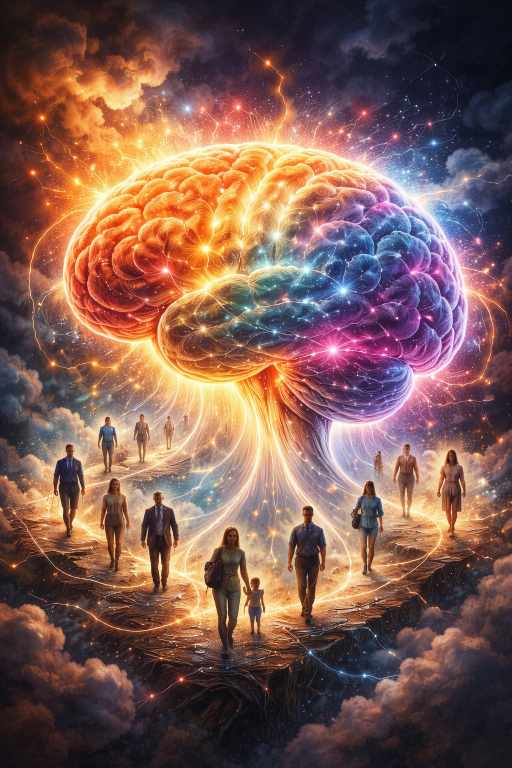
One of the most dangerous misconceptions about depression is the belief that it is a “poor man’s problem.” Many people assume that sadness, emotional breakdowns, and mental exhaustion are the result of financial hardship alone. In this line of thinking, money becomes the cure, and wealth the shield. But reality tells a very different story.
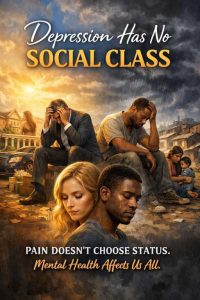
Depression has no social class.
It does not ask how much you earn, where you live, or how respected you are. It does not check your wardrobe, your bank balance, or your social media following. Depression is deeply human, and it can affect anyone rich or poor, educated or uneducated, famous or unknown.
There are people who sleep on luxury beds yet cry themselves to sleep. There are individuals surrounded by applause who feel painfully alone. There are successful professionals, celebrities, religious leaders, and business owners who silently battle thoughts they cannot explain. On the surface, their lives look complete. Inside, they are breaking.
This is why equating depression with poverty is not only incorrect, it is harmful.
Money can solve many physical problems, but it does not automatically heal the mind. Financial comfort may reduce certain stresses, but it does not erase grief, trauma, loneliness, childhood wounds, emotional neglect, loss, or identity struggles. A person can have everything society celebrates and still feel empty, disconnected, and overwhelmed.
Depression often hides behind smiles.
Some of the most depressed people are the ones who laugh the loudest, motivate others, and show up strong for everyone else. They have learned how to function while hurting. They know how to wear strength like a uniform, even when their inner world is collapsing.
This is especially true in societies where vulnerability is mistaken for weakness. People are taught to “be strong,” “man up,” or “pray it away.” As a result, many suffer in silence, ashamed to admit they are not okay, especially if their lives appear successful. After all, “what do you have to be depressed about?”
But pain does not need permission.
The human mind is complex, and depression can stem from emotional exhaustion, unresolved trauma, chronic stress, hormonal imbalance, loss of purpose, or deep internal conflict. Sometimes, it comes without a clear reason at all. That does not make it less real.
When we reduce depression to poverty alone, we silence those who don’t fit the stereotype. We dismiss their pain, invalidate their experience, and push them further into isolation. We also create a dangerous narrative that wealth equals happiness, leaving many confused and ashamed when money fails to fix what hurts inside.
- Depression is not laziness.
- It is not ingratitude.
- It is not weakness.
It is a serious mental health condition that deserves understanding, compassion, and proper care regardless of who it affects.
If we truly want to address depression, we must stop judging pain by appearance. We must listen more and assume less. We must create safe spaces where people can say, “I am not okay,” without being reminded of how “lucky” they are supposed to feel.
Whether someone lives in a mansion or a one-room apartment, emotional suffering is still suffering. Tears weigh the same, no matter where they fall.
Depression has no social class.
It is not selective. It is not fair. And it does not discriminate.
What can make a difference, however, is empathy. Sometimes, the most powerful help is not advice or comparison, but presence letting people know they are seen, heard, and not alone.
Because healing begins when we finally accept this truth:
Mental health is a human issue, not an economic one.
Read more 👇🏿
https://shpinitiative.com.ng/5-mental-health-myths-nigerians-need-to-stop-believing/
https://www.artofmanliness.com/health-fitness/health/8-best-books-for-managing-depression/