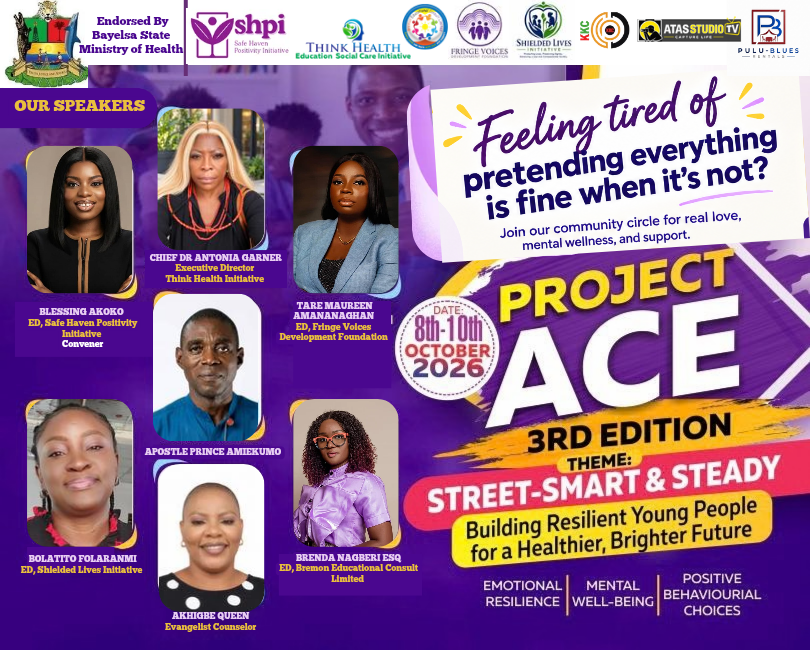
What began as a program planned for 150 participants turned into a remarkable community gathering as 292 people attended the Otuoke edition of Project ACE 3rd Edition 2026, organised by Safe Haven Positivity Initiative (SHPI). The impressive turnout exceeded the organisation’s initial target by nearly 95 per cent, highlighting the importance of taking mental health education and youth empowerment directly to grassroots communities.
Held under the theme “Street-Smart & Steady: Building Resilient Young People for a Healthier, Brighter Future,” the program brought together young people, adults, and other community members to discuss mental well-being, substance use awareness, emotional resilience, and positive behavioural choices.
Beyond the impressive attendance, however, the program created opportunities for learning, meaningful conversations, and access to support. Participants engaged with important issues affecting their lives and communities, while some expressed interest in seeking counselling after the event. For SHPI, these responses reinforced the need to make mental health information and support services more accessible to people who need them.

An Unexpected Turnout Reflecting Community Interest
The response in Otuoke exceeded expectations from the outset. Although the organizers had planned for 150 participants, 292 people attended, demonstrating considerable interest in the program and its message.
More importantly, the gathering brought together people of different ages and backgrounds, creating an opportunity for community-wide engagement. Rather than limiting conversations about mental health to young people alone, Project ACE encouraged broader participation and highlighted the role that families and communities play in promoting healthier choices.
Throughout the program, participants had opportunities to learn, ask questions, and reflect on issues such as emotional well-being, substance use, and responsible decision-making. Consequently, the event became more than an awareness campaign; it provided a space for people to engage with subjects that are often misunderstood or difficult to discuss openly.
The turnout also reinforced the value of community-based initiatives that bring relevant information closer to the people who need it.
From Mental Health Awareness to Seeking Support
While the attendance figure was encouraging, some of the most meaningful outcomes emerged from the conversations that followed the presentations.
During the program, community members shared testimonials about their experiences and the value of the information they received. In addition, some participants expressed interest in accessing counselling services, indicating a willingness to seek further guidance and support.
These responses highlighted an important connection between mental health education and help-seeking behaviour. Although awareness helps people understand their challenges, knowing where to find appropriate support can be an equally important step towards improving their well-being.
For this reason, SHPI considers the interest in counselling a significant aspect of the Otuoke engagement. It demonstrates why mental health initiatives should not end when an event concludes but should also help individuals identify appropriate avenues for continued support.
Furthermore, the experiences shared by participants reinforced the importance of creating safe and welcoming spaces where people can ask questions, discuss personal concerns, and learn that seeking help is a positive step towards addressing life’s challenges.

Empowering Young People with the Right Information
At the heart of Project ACE is the belief that young people are better equipped to make positive decisions when they have access to accurate information, practical knowledge, and appropriate support.
With this in mind, the 2026 edition focused on mental well-being, emotional resilience, substance use awareness, and positive behavioural choices. These issues are particularly relevant to young people who may encounter social pressure, emotional difficulties, and situations that require careful decision-making.
Through education and open discussion, Project ACE seeks to help young people understand the consequences of their choices, recognise potential risks, and develop healthier ways of responding to life’s challenges.
Nevertheless, promoting youth well-being requires the involvement of more than young people alone. The participation of adults and other community members in Otuoke demonstrated that building healthier environments is a shared responsibility.
When parents, community leaders, organizations, and young people engage in these conversations together, they create greater opportunities for understanding, guidance, and support.
Consequently, Project ACE continues to promote a community centered approach to youth empowerment, recognizing that informed individuals and supportive communities are both essential to lasting change.
Bringing Speakers, Partners, and Community Advocates Together
The success of the Otuoke program was made possible through the contributions of speakers, partners, volunteers, and other stakeholders who shared a commitment to improving community well-being.
Among the featured speakers were Chief Dr. Antonia Garner, Executive Director of Think Health Education Social Initiative; Tare Maureen Amananaghan of Fringe Voices Development Foundation; Bolatito Folarinmi, Executive Director of Shielded Lives Initiative; Prince E. Amiekumo; Evangelist Counselor Akhigbe Queen; and Brenda Nagberi, Esq., Executive Director of Bremon Educational Consult.
Through their participation, the program benefited from contributions from different professional and advocacy backgrounds, helping to advance its goal of providing relevant information and encouraging constructive conversations.
The initiative was endorsed by the Bayelsa State Ministry of Health and supported by collaborating organizations and partners committed to community development and well-being.
Meanwhile, volunteers and other members of the organizing team played an important role in coordinating activities and supporting participant engagement. Their collective efforts helped create an environment in which community members could learn, interact, and participate in the program.
SHPI appreciates everyone who contributed their time, knowledge, resources, and support towards making the Otuoke engagement possible.

Beyond Attendance: Building Lasting Community Impact
Although the participation of 292 people represents an important milestone, SHPI recognizes that the true value of a community program extends beyond the number of people who attend.
Ultimately, the goal is to ensure that participants leave with useful information, a better understanding of the issues discussed, and greater awareness of where to seek help when necessary.
In Otuoke, the testimonials shared and the interest expressed in counselling provided encouraging indications of engagement. However, sustained impact will depend on continued awareness, access to appropriate services, and opportunities for community members to apply what they have learned.
For SHPI, this understanding informs its commitment to promoting mental health education alongside counselling and other support initiatives. By connecting awareness with appropriate services, the organization aims to help individuals move from understanding their challenges towards taking constructive steps to address them.
Furthermore, community-based programs can help challenge misconceptions about mental health and substance use, encouraging more informed and compassionate responses to people experiencing difficulties.
Through continued engagement, SHPI hopes to strengthen community understanding and contribute to environments in which seeking support is encouraged rather than stigmatized.
From Otuoke to Toru-Orua: Extending the Reach of Project ACE
Following the Otuoke program on October 8, 2026, Project ACE continued its community engagement in Toru-Orua on October 10, 2026.
The two engagements formed part of SHPI’s broader effort to bring mental health education and youth empowerment to grassroots communities across Bayelsa State.
By taking the program to different communities, the organization sought to expand access to relevant information and create more opportunities for people to participate in conversations about mental well-being, substance use prevention, and positive life choices.
The experience in Otuoke provided encouraging momentum for this mission. In particular, the turnout demonstrated the importance of creating opportunities for communities to engage directly with issues affecting their lives.
As the organization continues its work, the lessons from the program will help reinforce its commitment to community engagement, accessible information, and appropriate support services.
A Shared Commitment to Healthier Communities
The Otuoke edition of Project ACE 3rd Edition 2026 marked an encouraging milestone for Safe Haven Positivity Initiative. By attracting 292 participants against an initial target of 150, the program exceeded expectations while creating opportunities for education, connection, and further support.
However, the significance of the event lies not only in the number of people who attended but also in the conversations it encouraged and the interest it generated in counselling and mental health support.
SHPI extends its sincere appreciation to the speakers, partners, volunteers, community leaders, and residents who contributed to the Program’s success. Their participation reflects the value of working together to promote healthier choices and stronger communities.
Looking ahead, the organization remains committed to empowering young people with accurate information, promoting emotional resilience, raising awareness of substance use, and encouraging positive behavioural choices.
Through Project ACE, SHPI continues to champion a simple but important message: when people have access to the right information, supportive environments, and appropriate services, they are better positioned to make informed decisions about their well-being.
The work does not end when a program concludes. Instead, every conversation, every new understanding, and every step towards seeking support creates another opportunity to make a difference.